In the 1970s Esmond featured in a number of highly acclaimed television productions, notably historical dramas, mainly for the BBC. In 1971 he appeared with Sir Ralph Richardson in She Stoops To Conquer, directed by Michael Elliott. Richardson was at his eccentric best. During one scene they were seated together at a table. The set was lit by a large number of candles and the molten wax from them dripped everywhere. In a bored moment between takes, Richardson picked up a bit and ate it. Turning to Esmond, he said: "Would you like to try some candle grease? It's awfully good!"


The same year Esmond appeared in the second of six episodes of Elizabeth R, the memorable series which followed hot on the heels of The Six Wives of Henry VIII. Glenda Jackson gave a remarkable performance as Queen Elizabeth I, spanning her entire reign and ageing 45 years in the process. Esmond's episode is called The Marriage Game, in which he plays the Spanish Bishop of Quadra.
His task is to deal with the complex, unenviable and ultimately unsuccessful attempts to provide a suitable husband for the Virgin Queen. He famously described Elizabeth as having "a hundred thousand devils in her body"! At the forefront of the cast, playing Robert Dudley, Earl of Leicester, was Esmond's friend, Robert Hardy. They had long shared an interest in archery, and it was the topic of many conversations between the two men. Their talks sowed the seeds of a project which would soon come to fruition for Esmond - presenting a staged account of the Battle of Agincourt from the point of view of one of the archers, perhaps as a one-man show. But for the time being it remained merely an idea.
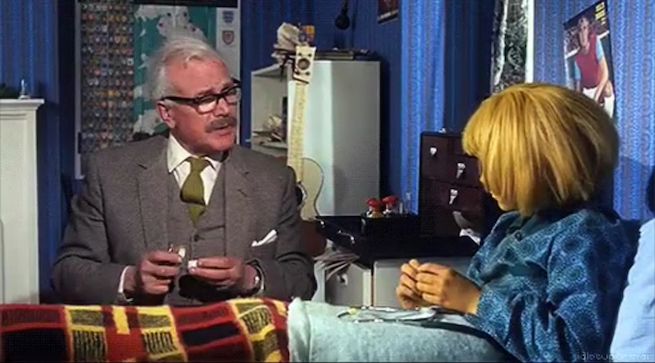
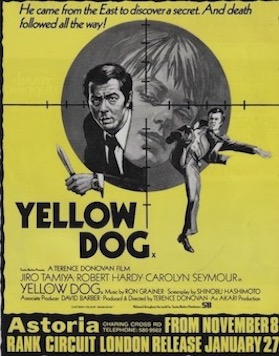
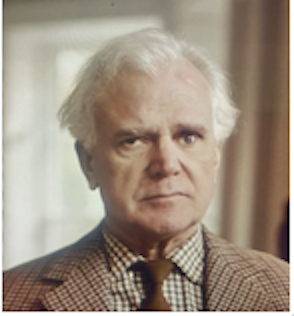
The same colour featured in Esmond's next film, Yellow Dog (1973), a somewhat bizarre spy story directed by Terence Donovan (better known as a photographer) in which he played a retired British secret agent called Mundt (pictured below left). Again he worked with his friend Robert Hardy, and no doubt archery and Agincourt were amongst topics of conversation between takes once more. Certainly this remained in the forefront of Esmond's mind at the time and remained so when he travelled up to Manchester later the same year to appear as Dr Warburton in T.S. Eliot's play The Family Reunion with Edward Fox, Joanna David and Nora at the Royal Exchange Theatre, under the direction of Michael Elliott. As chance would have it, this was at the time that the Royal Exchange organised a series of late night shows which took place after the main performance of the evening as part of the Manchester Festival. People were invited to stay on, have supper and a drink and enjoy some further entertainment from a wide range of artists such as Gerald Harper, Eleanor Bron, Frank Muir and Edward Fox. Esmond was invited by James Maxwell (who had been in the Old Vic Company with him in the early 1960s) to take part and to contribute something entirely of his own choice. Initially Esmond was reluctant about the whole idea and told Maxwell that he had no party pieces that he could offer. Maxwell was having none of it. He encouraged him to go away and give it some serious thought as he intended booking him to perform whatever it was in October. This gave Esmond just six weeks to come up with something. There is nothing quite like a deadline!
Esmond came up with Agincourt - The Archer's Tale, a one-man tour de force telling the story of the Battle of Agincourt entirely from the point of view of a one ordinary soldier in the ranks of the army.
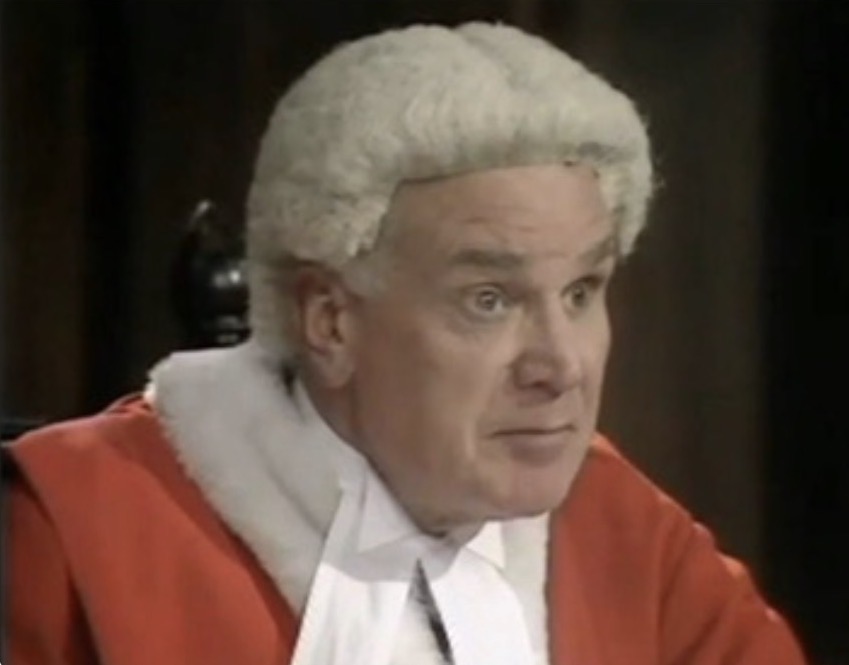
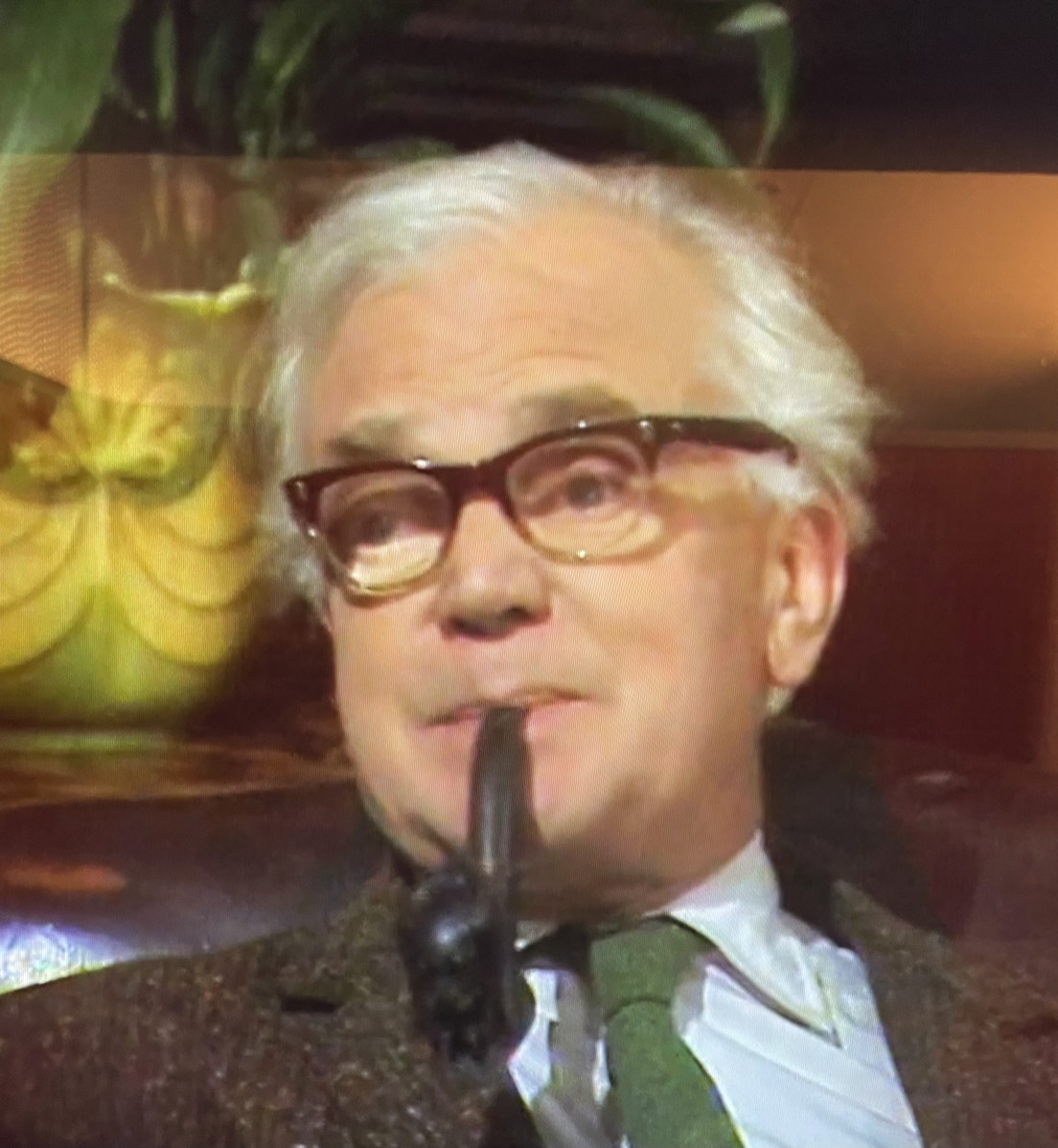
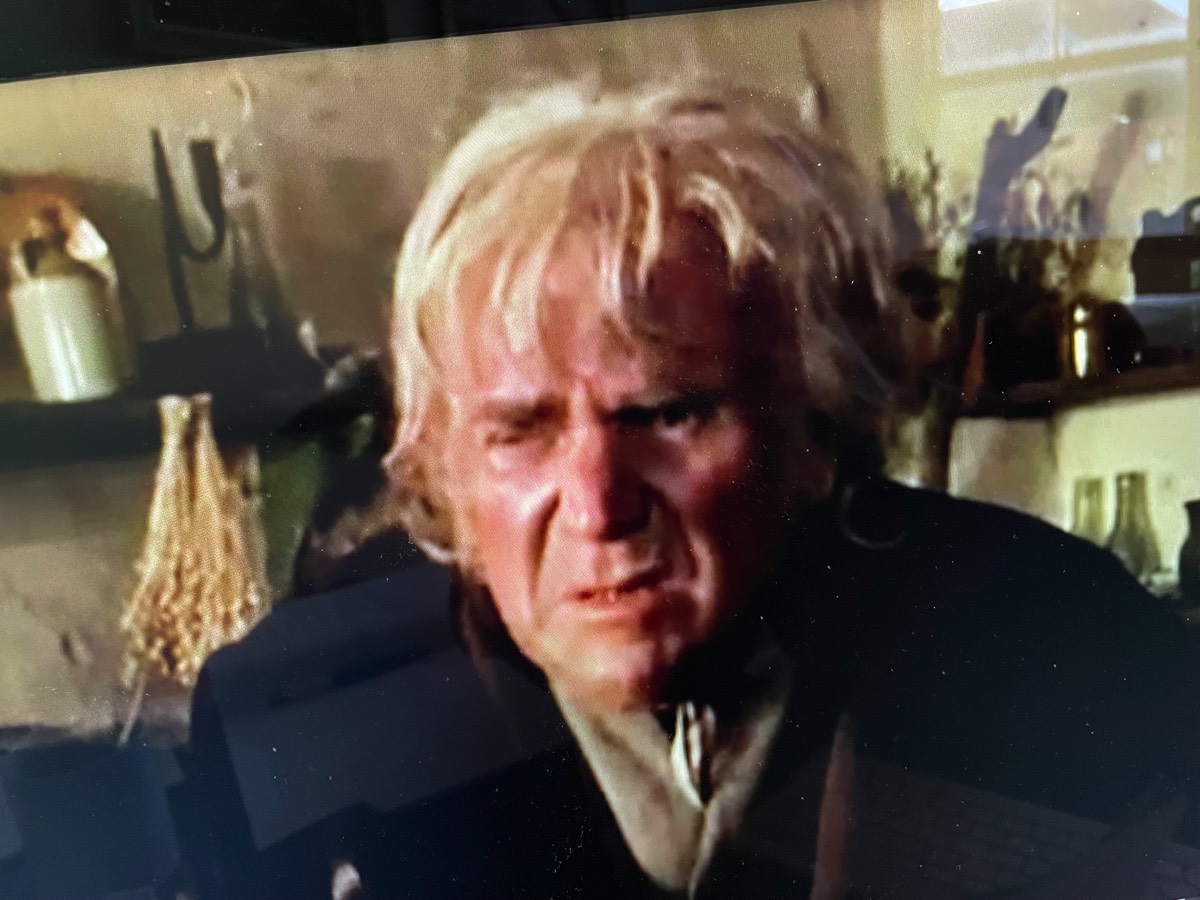
Three examples of Esmond's TV work in the Seventies:
(Left) As Mr Justice Ruddy in an episode of Softly Softly called Trial (1973)
(Centre) As Doctor Stowe in an episode of Public Eye called Many a Slip (1972)
(Right) As Conjuror Trendle in an episode of Wessex Tales called The Withered Arm (1973)
Agincourt - The Archer's Tale was a huge success. Rosalind Knight was present at the first performance on 23rd October 1973 and with the rest of the audience was spellbound by Esmond's extraordinarily evocative narrative and delivery. Drawing on various historical sources, including ballads and contemporary accounts, he told his tale from the point of view of a Wiltshire farmer who leaves his home in the year 1415 to follow his King to France where, as part of a small, depleted army he helped to fight and win a battle in a muddy field near Agincourt against hugely superior French forces. The victory was even the more impressive considering the condition of the men by the time they reached Agincourt - half-starving, cold, wet and mostly suffering from diarrhoea or dysentry. The archers' prowess with a longbow made a major contribution to the victory, with a killing range of 200 yards or more, and a firing rate of up to four dozen arrows a minute. At close range, the arrows could pierce the best armour and an arrow storm was capable of driving back the most determined opposition.

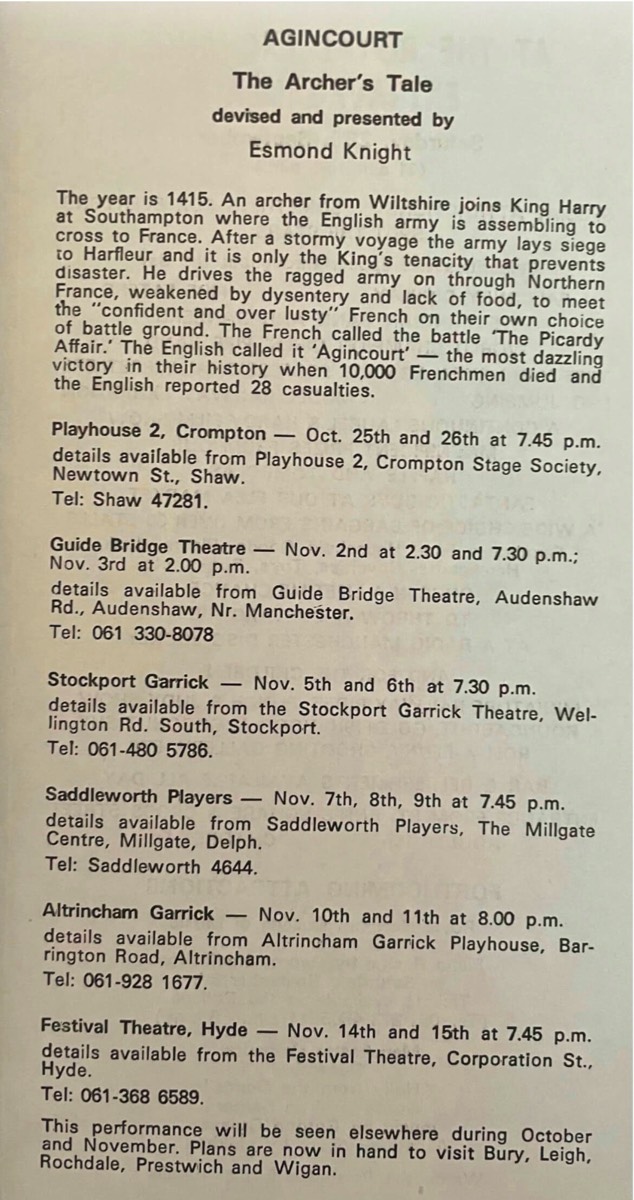
(Above Left) In Agincourt - The Archer's Tale, which Esmond researched, wrote and performed.
(Above Right) Agincourt was very popular. This is Esmond's schedule for late October / November 1974 alone.
(Picture courtesy of St Dunstan's archive.)
For his performance Esmond dressed authentically and carried a specially constructed longbow, taller than him by more than a foot. Such was the success of the show that Esmond was invited to repeat his performance many times throughout the late 1970s and early 1980s, initially touring the north of England giving performances in schools, civic halls and theatres.
In October 1974 a shortened version, under the title Our King Went Forth to Normandy, was given on BBC radio, and in August 1978 he gave four more performances at the Open Air Theatre, Regents Park. The summer before he had also appeared at the Open Air Theatre as the Chorus in Henry V with the New Shakespeare Company, returning there thirty-eight years after playing Lysander in A Midsummer Night's Dream as he waited for his call-up into the Royal Navy.
Despite the deterioration of his already limited sight, Esmond continued to work regularly. In 1974 he appeared in A Fall of Eagles, an ambitious drama about the fall of three European dynasties - the Romans, the Habsburgs and the Hohenzollerns - with a magnificent cast including Michael Aldridge, Pamela Brown, Barry Foster, Marius Goring, Curd Jürgens, Patrick Stewart … and Nora Swinburne! During the production he was interviewed by the St Dustan's Review in which he gave an insight into the particular technical problems he sometimes encountered:

"I always hope that on set there are going to be one or two light-sources, or beacons as I call them. The property man is very important to me. They often say, 'Is there anything I can do, Esmond, to make this easier for you?' I had to do a bit of a thing which was shown on T.V. last Saturday. I was an old general in a wheelchair. I had to turn my chair and wheel across the set, missing a table or two on the way to get to where my crutches were leaning. When I turned my chair round I couldn't see anything at all. It was an absolute blank. So I said to the director, 'Would you mind if I ask Jimmy, the props, to put a beacon somewhere on that table?' So we got a newspaper, the end of which hung over the edge of the table, and there happened to be a light which just caught it - and that was a lovely beacon. I could go straight towards it.
"In Fall of Eagles I am playing the part of a Russian General. We have to stop the old Czar's train and I have to get on board to tell him that the delegates of the Duma have requested him to resign. We shot this in a period railway carriage on the flats of Norfolk, but there again I had a very strong light pointing in my eyes. They had to give me an eye line every time. The Czar was sitting down and I was inclined to be looking there and they'd say, 'No, it's here, Esmond'. Then, when he gets up, he's not here but he's there and the camera was there, you see, and you've got to be very tricky. You must never look smack into the lens of the camera - it immediately spoils the illusion. But all the time people are nice enough to employ me and take that little extra bit of trouble."
(Reproduced courtesy of St Dunstan's)

Cranmer Court, Chelsea.
The Knights' final home.
Esmond was perfectly happy working for as long as anyone would employ him, which he continued to do. Nora, on the other hand, felt it was time to retire - she had, after all, been performing professionally for sixty years! Initially the plan was to call it a day after a run of The Family Reunion at the Royal Exchange Theatre in Manchester. However, this was extended slightly when Michael Elliott persuaded her to postpone the decision until 1975. Thus her swan song was ultimately in another T.S.Eliot play, The Cocktail Party, again with Esmond; and this time the venue was Manchester Cathedral. Nora later wrote: "I thought to end up in a cathedral, in the round, in an another Eliot play, was a lovely way to go out."

Esmond at the time of The Family Reunion in Manchester.
Soon after returning to London, Nora and Esmond were struck down with a bad bout of 'flu. Struggling up and down the three flights of stairs in their Bywater Street house was an ordeal, and it was this that made them decide to look for a more manageable property. It had to be in Chelsea as Esmond knew it so well and could find his way around safely. They were fortunate to find a light, spacious and moderately-sized flat in Cranmer Court (pictured left), a large complex overlooking Sloane Avenue, just around the corner from Bywater Street. Number 53 became their new home and remained so for the rest of their lives.
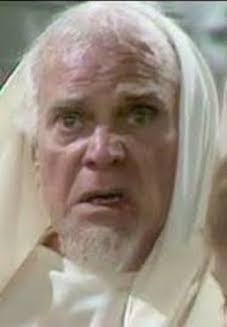
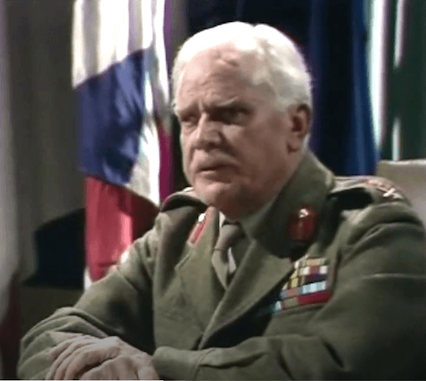
(Above) As General Pickford in The Thin Red Line,
episode 8 of the TV spy drama series Quiller starring
Michael Jayston as the character created by Elleston Trevor
under the pseudonym of Adam Hall. (1975)


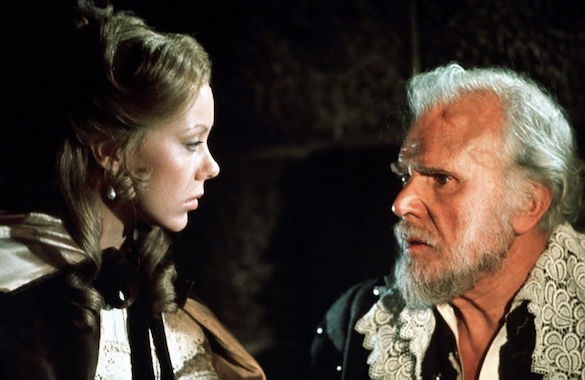
Robin and Marian was closely followed by The Man In the Iron Mask, an American TV production of Alexander Dumas's classic novel, starring Richard Chamberlain as Louis XIV of France and his twin brother Philippe (the man in the mask). Esmond plays Armand, father of Louise de la Valliere (Jenny Agutter) (pictured together right), the old man imprisoned next to Philippe and who is shown kindness by him. The cast was impressive, including Patrick Magoohan, with whom Esmond had appeared ten years earlier in an episode of Danger Man, and Brenda Bruce, memorably murdered in the opening scene of Michael Powell's notorious Peeping Tom (which Esmond also appeared in)!
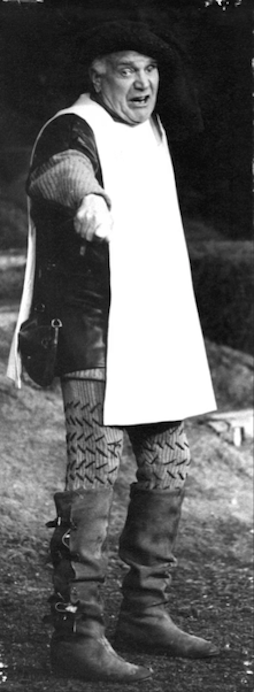
1977 saw Esmond, after a long gap, returning to Regent's Park Open Air Theatre in the New Shakespeare Company's production of Henry V, featuring Cive Arrindell in the title role, this being 37 years after his last appearance there as Lysander in A Midsummer Night's Dream in August 1940 as he was killing time awaiting his call-up papers to join the Royal Navy Voluntary Reserve. On this occasion Esmond played 'Chorus' (pictured left) and Celia Imrie was in the cast in two separate roles - Mistress Quickly and Alice. It was also performed at the Tilt Yard in Arundel, West Sussex, later in the year. More television roles followed included the Coroner in a 1978 adaptation of Daphne Du Maurier's Rebecca (with Jeremy Brett as Maxime de Winter, Anna Massey as Mrs Danvers and Joanna David as the second Mrs de Winter), and as an Old Capulet in Romeo and Juliet. On stage he again worked for Michael Elliott at the Royal Exchange in Manchester both as Marmaladov in Crime and Punishment with Leo McKern and Tom Courtney, and repeating his role as Dr Warburton in The Family Reunion with Edward Fox and Joanna David. The production opened on 27th March 1979 and subsequently transferred to London, playing from 18th April to 12th May 1979 at The Roundhouse, and from 19th June onwards at The Vaudeville Theatre.
Towards the end of the year, Esmond repeated his one-man performance for the BBC who produced a version of The Archer's Tale, this time filmed on location as well as in the studio, and with the addition of a second character a young archer, played by John Fowler. It was broadcast on BBC2 on 30th October 1979.
The cast of the Royal Exchange Theatre's
1979 production of The Family Reunion

(From left to right) Back Row: Esmond Knight, William Fox, Constance Chapman,
Edward Fox, Daphne Oxenford, Jeffry Wickham, Hilda Schroder;
Front Row: Avril Elgar, Pauline Jameson, Joanna David, Harry Walker