
Esmond Pennington Knight was born on 4th May 1906 at 9 Vicarage Gardens, East Sheen, Surrey, a quiet suburban road close to the edge of Richmond Park. Esmond's mother, Bertha (1870-1940), was a talented musician and singer whose grandmother, Sarah Pennington, sang in the chorus at Queen Victoria's coronation. Her father, Charles Davis, was a potter, inventor and prolific author of novels and plays (under the pseudonym of Frank Barrett). Esmond's father, Frank Knight (1871-1944), was a successful cigar merchant who helped to run the family business, Knight Brothers, importers of high quality Havana cigars from Cuba. The firm was established in 1863 and had sole agency in the UK for one of the best known and popular cigar brands, Romeo y Julieta, which proved extremely lucrative; Winston Churchill was one of the brand's devotees. Originating from Kent, the Knights were a colourful family, amongst them the highly regarded landscape artist John Buxton Knight (1841-1908) whose work hangs in galleries worldwide including the Tate Gallery in London.
Bertha and Frank Knight had four children, all boys - David (b.1902), Robert (b.1904), Esmond (b.1906) and Gilbert (b.1909). "We were all a bit scared of my old dad," Esmond confessed in an interview in later life. "He was a very forceful and dominating person. We never had any girls in the house, they simply weren't invited. So we were ridiculously self-conscious. My mother was very sympathetic to the four boys, but she was afraid to raise her small voice against my father - who was so loud and confident."
When Esmond was two years old, they moved to a larger house at 7 Langside Avenue, Putney, just a short distance from Vicarage Gardens, to accommodate the growing family. It was here that he spent his childhood and early adult years, in fact until he married at the age of twenty-two in 1929. In his autobiography, Seeking The Bubble, Esmond describes some of his vivid early childhood memories - for example: seeing the German Kaiser, Wilhelm II, being driven in state across Barnes Common in an open Landau seated alongside King Edward VII; witnessing the pioneer French airman, Pegoud, flying upside down in a Bleriot monoplane over Hurlingham, just across the river from Putney; hearing a single cannon-shot ring out across the sea from the Isle of Wight on the day the First World War began; and seeing a Zeppelin shot down in flames over London.
His childhood was by all accounts a happy one, secure and stable, though there are newspaper accounts of one unpleasant incident. In 1916, at the age of ten, Esmond, together with his elder brother Robert, were indecently assaulted whilst visiting the Natural History Museum in Kensington. At the time, the culprit, Norman Douglas - aged 48, of 63 Albany Mansions, Albert Bridge Road, Battersea, a well known author and friend of D.H. Lawrence - was on bail accused of a similar offence and additionally charged. Bailed a second time, he took the opportunity to escape justice by fleeing the country. He settling in Italy where he remained until 1937 when he again fled again for similar reasons.
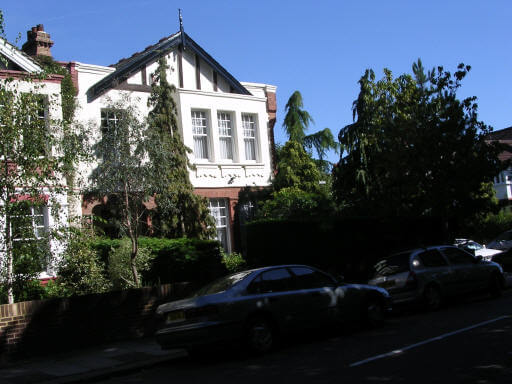
Esmond's birthplace - Vicarage Gardens, East Sheen, close to Richmond Park. He lived there until he was two.
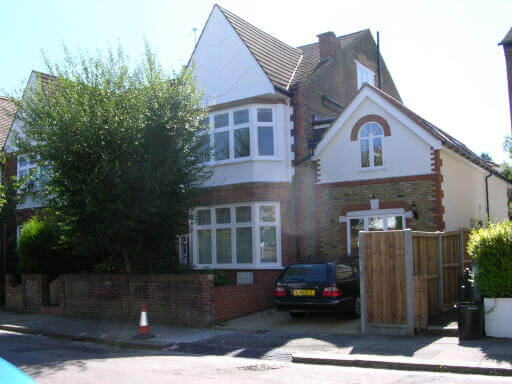
The Knights' home from 1908 in Langside Avenue, Putney. Esmond and his three brothers spent most of their youth.
Photographs Copyright John Hughes 2005
Esmond's formal education began at Willington Preparatory School which in those days was situated in Putney, a short walk from the family home. He didn't enjoy his early schooldays, nor did he particularly shine academically. His summer school report for the year 1920 reads: "Is making an effort to recover from past slacking." Nevertheless, Esmond is remembered at Willington to this day, and for many years two of his paintings hung on the wall of the school hall. One of them was a self-portrait of himself in character as Fluellen from Olivier's film of Henry V. In 1985, Esmond returned to Willington (now relocated to Wimbledon) to take part in the school's centenary celebrations. He performed two recitations for the boys and staff - The Archer At Agincourt (which he had developed as a one-man show in the 1970s) and an account of his personal experience on HMS Prince of Wales in 1941 - the event that changed his life so dramatically. Willington School had another famous old boy, Captain Lawrence Oates, the member of the Scott expedition of 1912 who heroically sacrificed his own life in an attempt to save his colleagues. Although he and Esmond were not contemporaries and almost certainly never met, the Knight and Oates families were well acquainted - in fact they were neighbours. In his autobiography, Seeking the Bubble, published in 1943, Esmond recalled that old Dr Oates next door once saved his life by "rendering brilliant first aid when I fell in the garden and cut my head open."
At his second attempt, Esmond passed the entrance exam and in January 1921 followed his elder brothers to Westminster School, a prestigious place of learning with roots back to the 14th century, located in the precincts of Westminster Abbey and just across the road from the Houses of Parliament. He was a member of Homeboarders House which reflected that he was a day pupil rather than a boarder proper. He never shone as a scholar, one reason being the lack of nerves from which he "used to suffer abominably" and which plagued him on first nights in the theatre. Nevertheless, once settled in at Westminster, he developed a deep affection for his school and made many friends there. Years later, sitting in the wardroom of HMS Prince of Wales in the spring of 1941, he was shocked to see photographs of what remained of the school after a Luftwaffe raid had virtually razed it to the ground - or so it seemed to him at the time. Mercifully the damage was primarily to the roof and school life was able to continue. Unlike others (e.g. Charterhouse, St Paul's) Westminster chose to remain at its traditional location for the rest of the war, and is still there to this day.
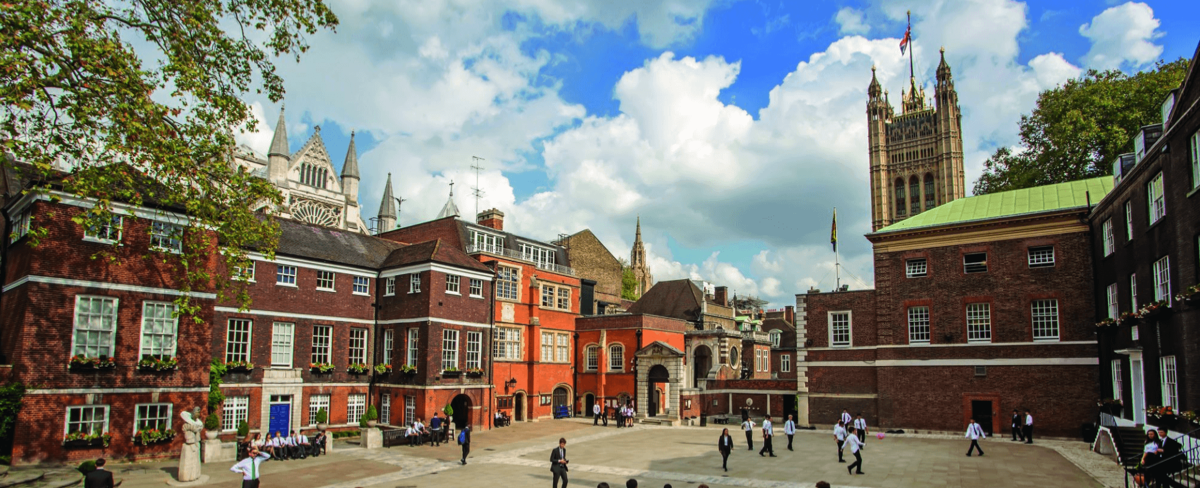
Westminster School where Esmond was educated as a day pupil from January 1921 to July 1925. Beyond the buildings on the left can be seen Westminster Abbey, and to the right, Victoria Tower at the south-west corner of the Houses of Parliament.
(Photograph reproduced by kind permission of the Governing Body, Westminster School)
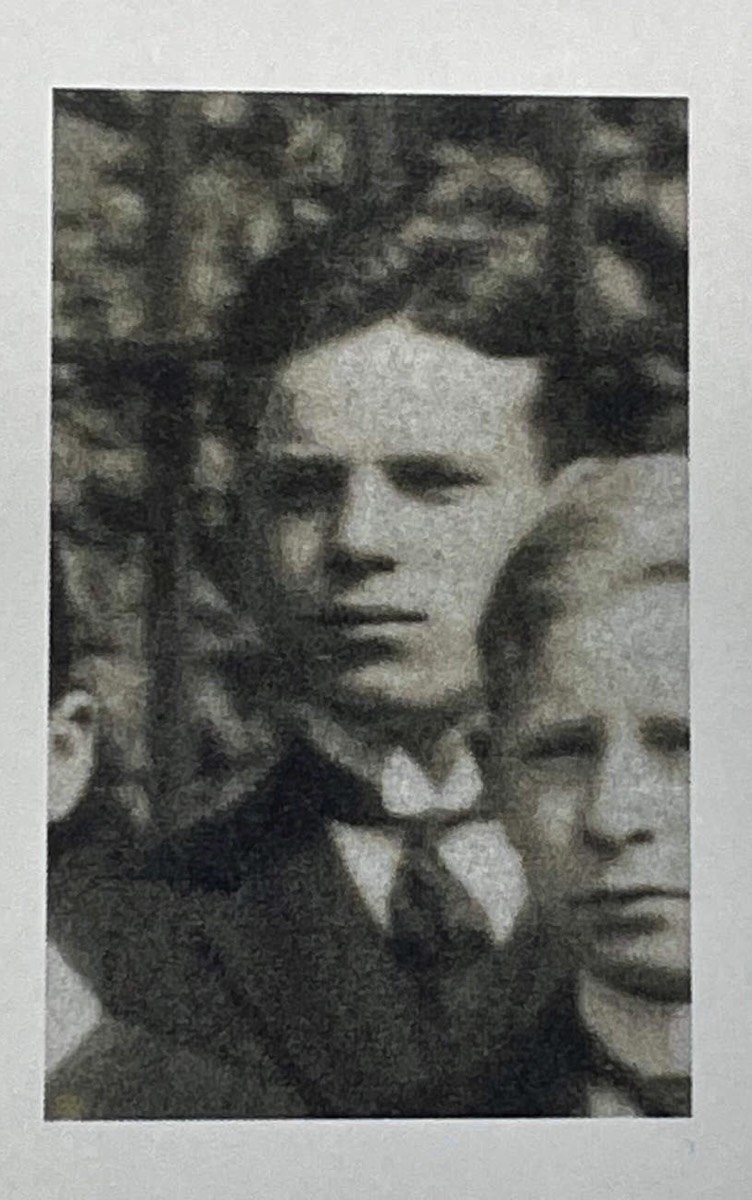
Westminster School do not have a photograph of Esmond in their archives - they hold only one school photograph taken during his time there, in 1923, and for reasons unknown he was absent on that day. However, they do have a picture of his elder brother David (right) taken in the 1919 school photo, before Esmond arrived. There is no mistaking the family resemblance. On leaving school, David became a member of the Honorary Artillery Company (HOC) for five years, then followed in his father's footsteps and joined the family business, Knight Brothers, importing cigars. As for Esmond, academic achievements may not have come easily to him, but he was a natural athlete. In particular, he developed prowess as an oarsman and was a member of Westminster's rowing eight, competing on on more than one occasion at the Henley Regatta. (For a vivd description of these, I recommend reading Esmond's autobiography, Seeking the Bubble.) His fitness and stamina would stand him in good stead during his acting career. In the 1930s his film work included some physically demanding parts, including a boxer (The Bermondsey Kid) and a footballer (The Arsenal Stadium Mystery).
It was during his first year at Westminster that Esmond saw a school production of Terence's Phormio which had a profound effect upon him. "As I sat there, waiting for the play to begin, I was conscious of that strange feeling of excitement as I gaped at the painted drop representing the theatre at Pompeii, and I had that sensation of nervous elation and expectancy which the audience must have felt at the first performance." The play was in Latin, and although he did not understand the content, he was deeply stirred by it and as he left the theatre . . . "I then and there resolved that, by hook or by crook, I must be an actor." There were many opportunities at Westminster for theatre trips, being situated close to the West End of London, and Esmond was by no means the only pupil there harbouring desires to work in the theatre - John Gielgud amongst them. Another, Glen Byam Shaw, became a highly regarded actor and director with whom he worked, and who later influenced Esmond's daughter, Rosalind, in her decision to become an actress. There were family theatre trips too. One in particular, to see Cinderella at the King's Theatre, Hammersmith, he would recall vividly when he took over the very same theatre as an actor manager in 1939.
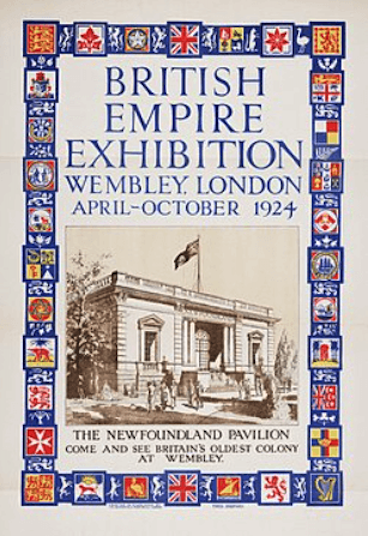
At an early age Esmond developed a passion for falconry, thanks mainly to the influence of his Uncle Chas - Captain C.W.R. Knight - who was a falconer of great renown - more of whom later. During his summer holidays in 1924, an eighteen-year-old Esmond took part in the Pageant of Empire at Wembley Stadium, a vast exhibition lasting six months. He had various roles, notably helping his uncle give a display of falconry in the main arena. Together, they flew peregrines and merlins loose and "to the lure", much to the bewilderment of the majority of the vast crowd who had never seen anything like it before. One lady was heard to remark: "I don't know if they're real birds, but if they aren't it's very clever." He also earned some money (£3 a week) looking after three of the three hundred horses involved in the pageant which including sleeping on straw close by them. In addition he volunteered to participate in the grand finale, charging around the arena on horseback dressed as a "Nigerian Horseman" uttering blood curdling yells, waving razor-edged swords and trying desperately not to fall off!
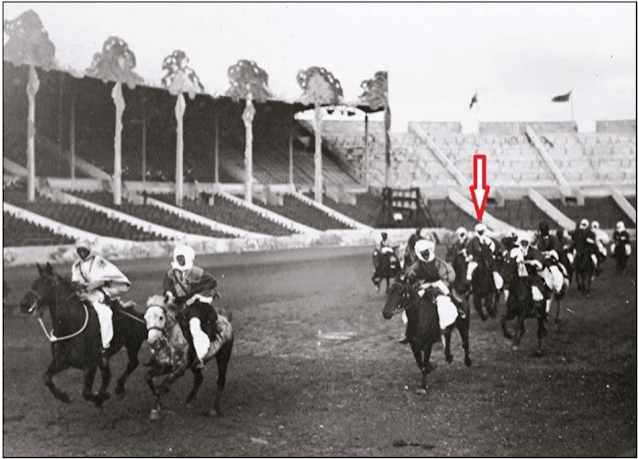
The Pageant of Empire in the newly built Wembley Stadium - a press photograph of the rehearsal for the procession of the "Nigerian Horsemen", part of the closing ceremony in October 1924. Esmond is in there somewhere suitably disguised, one of numerous locals recruited to pad out the numbers. He is not the one highlighted with the arrow - that's Mr Beck, the resident superintendent of the Nigerian Village who was supposed to be leading the group at a gentle trot. However, as it was only a rehearsal, one of the real Nigerians, a silversmith called Bala, took over and led a charge from one end of the stadium to the other "just for fun". Mr Beck got left behind!
Participating in the Pageant of Empire had a marked impression on Esmond. His father had in mind that when he left school he should either enter the family business (importing cigars), join the Royal Air Force, or go to South Africa and work on a fruit farm owned by another of his uncles. But the seed sown by the production of Phormio at Westminster School and theatre trips to see the great actors and performances of the day was further nourished by the spectacle and excitement of the pageant, and by the time of the great ball that heralded its end, he was convinced that acting was what he wanted to do with his life. As fate would have it, the progression from schoolboy fantasy to reality would occur quicker than he could ever have imagined.