

Peeping Tom was released in April 1960. Two months later, Esmond found himself doing something that couldn't be more removed from the furore it unleashed. The Maidstone Telegraph announced in their edition of 16th June that "The popular character actor of films, television and stage successes, Esmond Knight, has agreed to open the village fete at the school playing fields, East Malling, on Saturday next week." East Malling is in Kent and they pointed out that as a boy Esmond had spent much of his time in the county, and often stayed with his uncle at Quebec Cottage, Montreal Park, at nearby Sevenoaks. They also proudly stated that all proceeds went to the Church Restoration Fund.
Whether tarred with the same brush as Powell, or by coincidence, Esmond's film work dwindled for a number of years after Peeping Tom. But he was busy elsewhere with television providing a steady stream of work and some interesting roles. In 1961 he featured with a young Julie Christie in the BBC's A For Andromeda, a remarkably advanced science-fiction story for its day, in which an alien transition results in the building of a supercomputer, a genetic experiment, and the subsequent cloning of a female technician (Christie) with an alien mentality.
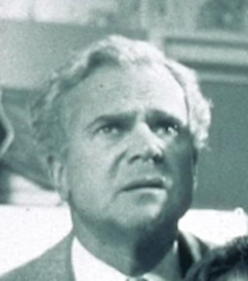
(Left) Esmond as Professor Reinhart in the BBC's 1961 science fiction series
A For Andromeda.
(Right) Julie Christie, who played the female technician, cloned and renamed Andromeda.
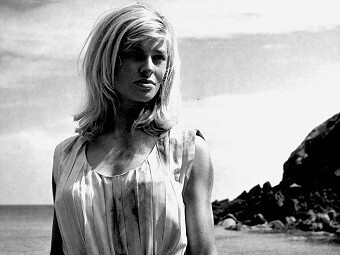
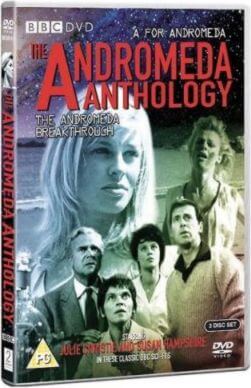
The power of the story was largely due to the fact that it was written by Sir Fred Hoyle, a renown astronomer, regarded as one of the most creative scientists of the 20th century. Hoyle added welcome and powerful technical accuracy and authenticity to the storyline. The series consisted of seven episodes that were broadcast during October and November 1961. It was hugely popular, with circa thirteen million people watching the final episode. The story was told in flashback, each episode beginning with Esmond, as Professor Reinhardt, recalling the main events. Reinhardt is the astronomer managing the team of scientists who build the supercomputer. In fact, the series was so successful that a sequel, The Andromeda Breakthrough, was created and broadcast the following year, although Esmond was not involved (nor was Julie Christie who was unavailable and replaced by Susan Hampshire). Until recently nearly all of A For Andromeda was thought to have been lost, with only a few brief clips and tele snaps (photographs of the TV screen taken mainly by John Cura) remaining. However, in 2006 a complete episode (The Face of the Tiger - Episode 6) was returned to the BBC by Ian Levine, a collector and archivist, which was subsequently released as a DVD, plus the remaining fragments, and the whole of The Andromeda Breakthrough. Reconstructions of the whole series from the tele snaps, original scripts and recordings have also been released

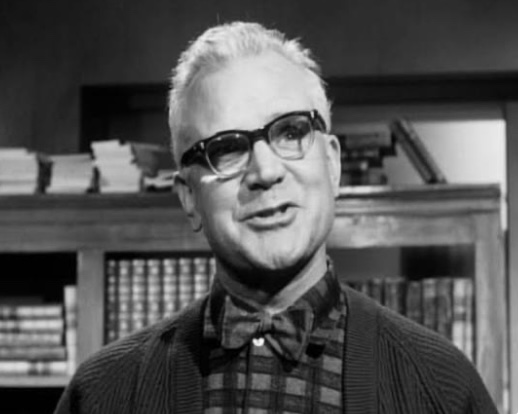
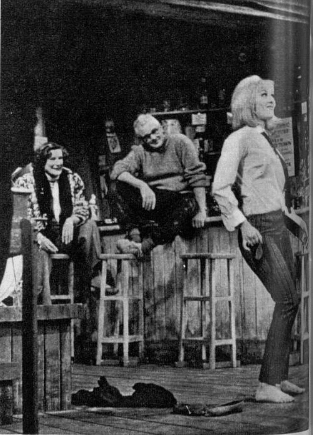
Two from 1962: (Left) - as Antoine Louvois in an episode of the TV series The Saint called The Covetous Headsman,
with Roger Moore as Simon Templar; (Right) - on stage at the Garrick as Drake in Two Stars for Comfort
with Hazel Hughes (seated) and Gabriella Licudi (dancing). Trevor Howard led the cast.
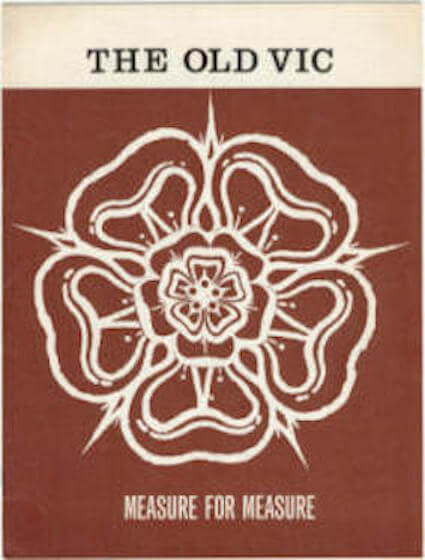
On stage, 1961 saw Esmond equally busy, playing alongside Vanessa Redgrave and Diana Rigg (as their father!) in The Taming of the Shrew, Christopher Plummer, Eric Portman and Gwen Ffrangcon Davies in Becket, Vanessa Redgrave again in The Lady From The Sea, and Trevor Howard in Two Stars For Comfort. The following year he returned to where it had all started for him - as a member of the Old Vic Company, for the 1962-3 season with Leo McKern, Charles Gray, Russell Hunter and Adrienne Corri. The Artistic Director was Esmond's son-in-law, Michael Elliott. As circumstances would have it, this turned out to be the last season for the Old Vic Company and they gave their final performance, Measure For Measure, on 15th June 1963 with Esmond in the role of Pompey. The Old Vic then became the home of the newly formed National Theatre Company under the direction of Laurence Olivier, pending construction of a purpose-built theatre on the South Bank. Plans for a National Theatre had been voiced as far back as 1848, and almost a century later, on the last page of his autobiography, Seeking The Bubble, Esmond himself had added his support for the idea: "In this new, shall we say National Theatre, let us have new ideas, new actors, new producers, new plays."
As it turned out, these were prophetic words indeed, and precisely in line with Olivier's own thinking … and this is what came to be. Ironically the "new actors", in Olivier's vision of the future, did not include Esmond. He was one of a number of past colleagues who were only too happy to offer their services but were politely refused. A few big names were all Olivier needed to launch the theatre and beyond that he planned an entirely new company with a new generation of actors. "It was so hurtful," Esmond later admitted to Anthony Holden, Olivier's biographer, "that I wished I had never asked him in the first place." Esmond was by no means alone in feeling this way; there was no Ralph Richardson in the new company, no John Gielgud, and no John Laurie. Eventually, The National Theatre Company gave its first performance on 22nd October 1963, a production of Hamlet with Peter O'Toole in the leading role and a cast that included Michael Redgrave, Rosemary Harris, Diana Wynyard, Derek Jacobi, Frank Finlay, Michael Gambon and Max Adrian.
During the late 1950s and early 1960s, the quality of Esmond's sight was at its peak. In a 1958 newspaper interview, Nora said that Esmond often cycled in the country around their weekend cottage, was painting prolifically and regularly went to the theatre and cinema, sitting in the first or second row. "And if you saw him crossing a busy street," she said, "you wouldn't know there was anything wrong with him." He astounded Rosalind on occasions. She recalls walking through Chelsea one morning and seeing Esmond on the other side of the road. She was in a hurry and so carried on walking. He called out: "Rose, is that you?" - which astonished her, considering the distance between them. Unfortunately, as the 1960s progressed, the quality of sight began to wane. Esmond again consulted Dr Nesfield who put it down to old age, but in fact it was glaucoma and the misdiagnosis had unfortunate consequences, as it delayed essential treatment for some years. When the glaucoma was identified in the early 1970s by Charles Cook, a registrar at the Moorfields Eye Hospital, he was able to take pills and eye drops to keep the pressure down in an effort "to hang on to the vision I do have", as he himself put it. He also visited Moorfields every three months so they could keep a check on things. But by then the damage had been done and the limited and highly precious sight deteriorated more rapidly as a result.
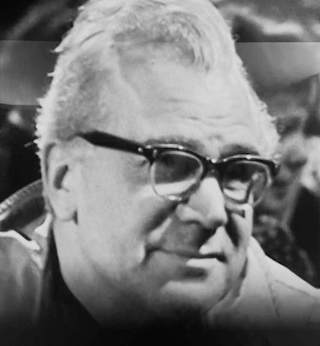
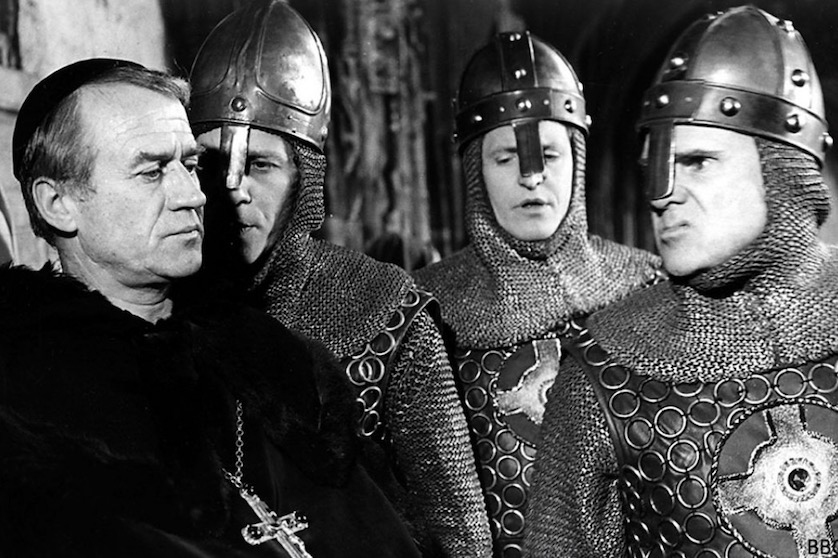
Meanwhile, Esmond was involved in in several television plays, including To Bury Caesar in 1963, a play by Bernard Mather broadcast as part of the series ITV Television Playhouse in which he again effected a Welsh accent to play Springwood, a sleazy tabloid journalist (above left). And in March 1964 he appeared in an adventurous BBC production (as part of a series called Festival), of T.S. Eliot's play Murder in the Cathedral about the killing of Thomas à Becket, Archbishop of Canterbury, by three knights supposedly acting on behalf of King Henry II. It was performed on location in Canterbury Cathedral where the murder had taken place in 1170. Esmond also appeared in another production in the Festival series - Lysistrata. The BBC production was recorded in Canterbury Cathedral and broadcast in March 1964 - Cyril Cusack played Becket with Esmond as one of the three knights intent on his murder (above right - Esmond on far right). The BBC prepared a short promotional trailer for the production which included the knights approaching Becket in the crypt, then an apparent "freeze frame" as they drew their swords. But "freeze frame" technology didn't exist then, so the actors were asked to stand totally still for fifteen seconds!
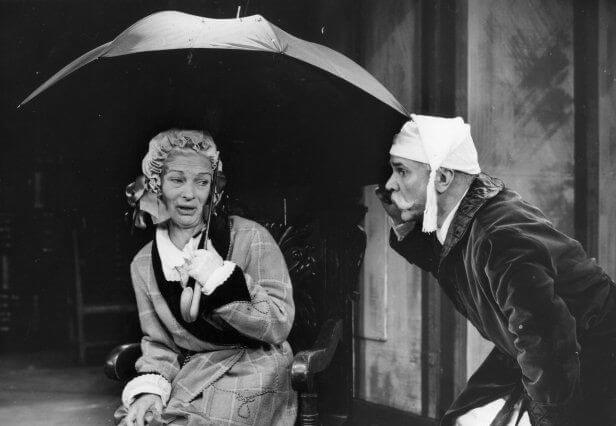
He then accepted an invitation to join Sir Bernard Miles' Mermaid Theatre Company for its 1964-65 season and worked on a very varied programme ranging from tragedy (Oedipus Rex) to farce (Dandy Dick) by way of a new musical. In Dandy Dick, he was revisiting a piece he had filmed with Will Hay precisely thirty years before. Bernard Miles himself was part of the acting company; others were James Bolam, Patrick Wymarck, Denise Coffey and Freddie Jones (father of actor Toby Jones).
On stage at the Mermaid Theatre in 1965 with
Sonia Dresdel in the farce Dandy Dick.
The new musical was called Four Thousand Brass Halfpennies, an adaptation by Bernard Miles himself of Dryden's 1690 comic play Amphitryon, with songs by Gerald Frow (lyrics) and Kenny Graham (music). Based on a Greek myth, Jupiter disguises himself as Amphityron to seduce his wife Alcmena while Amphityron is away at war. Esmond played Amphitryon which was a singing role. In the first act he had a duet with Alcmena (Back So Soon), and in the second a solo (It's Not My Day). In the programme were drawings of the main characters including Colin Ellis, the artist who drew them:
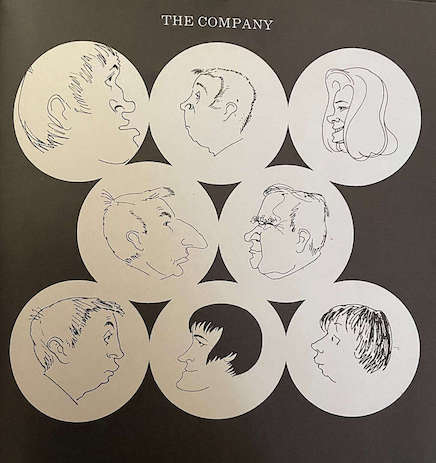
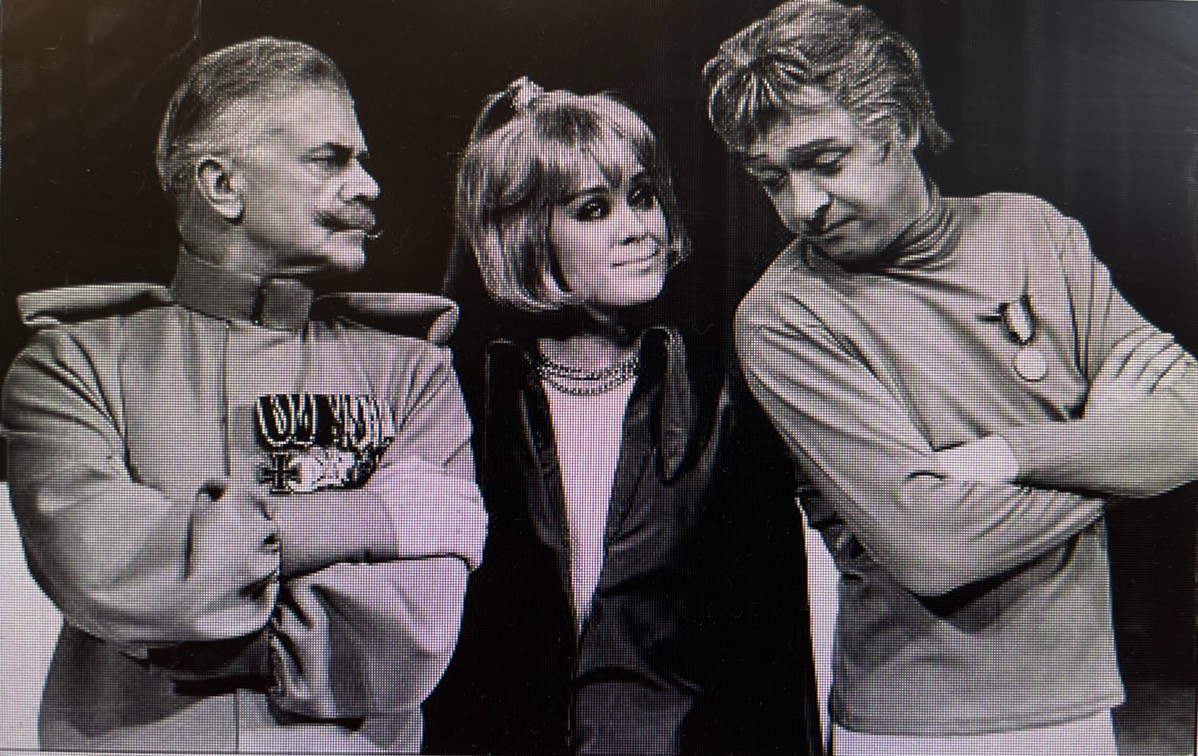
(Above)(l-r): Amphitryon (Esmond), Alcmena (Jennifer Clulow) and Jupiter (Freddie Jones). (Left): Colin Ellis's drawings of cast members which appeared in the programme, including himself (bottom left). Esmond is middle right.
As one of the three tribunal judges in John Le Carre's
The Spy Who Came In From The Cold (1965).
(Photograph courtesy of the British Film Institute)
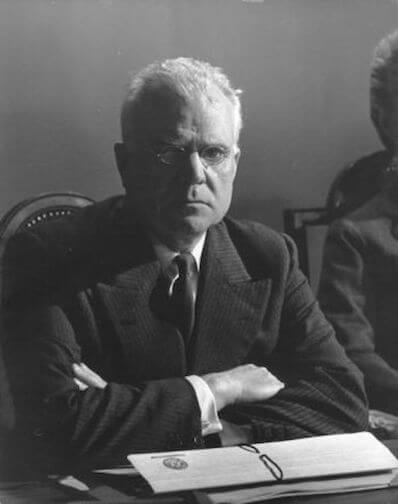
During his time at the Mermaid, Esmond spent several days at Shepperton Studios filming another of his brief but highly memorable screen appearances, this time in The Spy Who Came In From The Cold, based on John le Carré's seminal cold war spy novel. He plays the eldest of three judges presiding over a tribunal in East Germany that sits in closed session to determine whether or not its chief spymaster, Mundt, is a double agent. Wearing a neatly cut suit and steel-rimmed glasses, Esmond walks into the courtroom (counting his steps I suspect), takes his place behind the judges' table, and sits silently listening to the proceedings. He is passive, yet his manner is extremely authoritative, like an older and mute version of von Schiffer, the character he portrayed in The Silver Fleet. He has just one line of dialogue, but when he speaks there is real menace in his delivery:
"If there is communication between the two witnesses, Leamas will be taken out and dealt with."
The whole cast of The Spy Who Came In from The Cold are excellent, including minor characters played by Michael Hordern, and Rupert Davies as George Smiley, who supposedly lived at number 9 Bywater Street, Chelsea - practically opposite Esmond's home in real life (number 35). Richard Burton, as Leamas, a burnt-out, embittered agent bordering on alcoholism, gives arguably his finest screen performance. He and Esmond had worked together before, on stage in Monserrat in 1952, and there were other old colleagues on set with whom he had work at various times - Claire Bloom (1948 Stratford season), Cyril Cusack (Gone To Earth) and Robert Hardy (The Caine Mutiny Court-Martial).

At the 1966 Edinburgh Festival Esmond appeared in two plays staged by the Pop Theatre - The Winter's Tale and The Trojan Women, and in the latter he received high critical praise for his performance as "the pompous, bone-headed soldier Menelaus". Conditions at The Assembly Hall were not easy, even for fully sighted actors, with cramped, make-shift dressing rooms, a route march to the open stage in the main hall, and entrances to be made along dark, sloping aisles through the audience. Nevertheless, in an interview with journalist Mamie Crichton published in the Scottish Daily press, Esmond made it clear that he expected no special favours:
Few of the large audiences know that Esmond Knight needs a sixth sense to his colleagues' five, and that's the way he wants it to be. "I must be judged solely by my performance as an actor," he said calmly. "After 23 years of near-blindness, I've developed my own way of remembering moves. Counting steps, watching shadows, so that it becomes subconscious and all my concentration can be given to the performance." Now he puts on his make-up. On stage he wears no visual aid. Offstage he wears glasses with a thick lens over his seeing eye. "With my glasses on I can see you," he said. "But I have no idea what you look like. Without them I would be aware only of a vague shadow. Fortunately acting is a job you rehearse. In London, before coming to Edinburgh, they marked out a space exactly the size of the Assembly Hall stage. It wasn't too difficult adapting to the real thing." Minutes before, I had seen Moira Redmond take him by the hand, laughing and chatting as she set him on his way round the corners and down the steps from the dressing rooms. It was as easy and natural as passing the sugar, and accepted in the same spirit. It hasn't been quite so easy for the ladies of the company to be composed over their souvenirs of this Festival season - small, framed paintings, mostly lively seascapes, painted and given by Esmond Knight!
In May 1966, Esmond was back in the Church Stretton area where he had spent time at St Dunstan's in 1942 and again filming Gone to Earth several years later. Presumably because of his associations with the county, he had been invited and gladly accepted the role of first president of the newly formed Shropshire Association for Dramatic Art. The inaugural meeting was held on 21st May at the Little Theatre, Donnington. Esmond was able to attend despite being involved in rehearsals for a new BBC television series, Lord Raingo, which was broadcast the following year.
The late 1960s saw Esmond working, but not as hard as he would have liked. A mild heart attack, gradually deteriorating sight and turning sixty in 1966 all conspired to slow him down whether he was happy about it or not. In a Christmas card to some friends dated December 1967, featuring a painting of his on the front, he wrote: "It does not promise very well for us at the moment. However, one day, I'll get to see you again." The heart attack occurred at Nora's Ark, their weekend cottage in Weston Turville. Esmond was taken back to Bywater Street and ordered to rest - to stay in his study and not to go up and down stairs. It was a great shock to him and he did everything he was told, to the extent that he made a full recovery.
But it was a warning, and from then onwards he had to pace himself. On one occasion, Rosalind was walking with her father and Sally Duncan, a nurse from Vincent Nesfield's nursing home who had helped Esmond recuperate after his eye operations. Sally had become a good friend of the Knights over the years and when she married and moved to the north of England she became a regular in the audience at the Royal Exchange Theatre, especially if Esmond, Rosalind or Nora were on stage. They were walking one weekend in Lime Park in Derbyshire and Esmond complained that his heart beat was racing. Sally immediately insisted that they slow their pace, and from then onwards all seemed well.
Things were not entirely grim, however, and Esmond continued to be involved in major productions. That same year (1967) he appeared on stage in Bernard Shaw's Getting Married at the Strand Theatre in the West End, with a cast that included Ian Carmichael, Googie Withers, Moira Lister, Alec Clunes, Roland Culver and Raymond Huntley. Nor did he shun other activities. In October he contributed a painting for a bazaar held at the Criterion, Piccadilly, to raise funds for elderly members and small children of the variety profession. Opened by Ken Dodd, the event also had contributions from celebrities including Roger Moore, Yvonne Mitchell, Peggy Mount, Cecily Courtneidge, Gwen Francon-Davies, Susan Hampshire and David Nixon.
On the small screen he appeared in a number of popular series - Z Cars, The Troubleshooters, The Champions, also various BBC plays for series such as Thirty Minute Theatre and The Wednesday Play. On 21st January 1968 the BBC broadcast a play by David Mercer called The Parachute in their Play of the Month series, in which Esmond played Helmut, an ageing retainer in an aristocratic German family, whose prime charge is Werner von Reger. Werner is seen at several stages of his youth played by different actors, the oldest by John Osborne who is testing a new parachute for the Luftwaffe (pictured here with Esmond). The 18-year-old Werner was played by Rick Stroud who went on to be a successful producer, director and writer. He recalled how helpful Esmond was to a nervous young actor at the start of his career, also how funny he was … and how naughty!
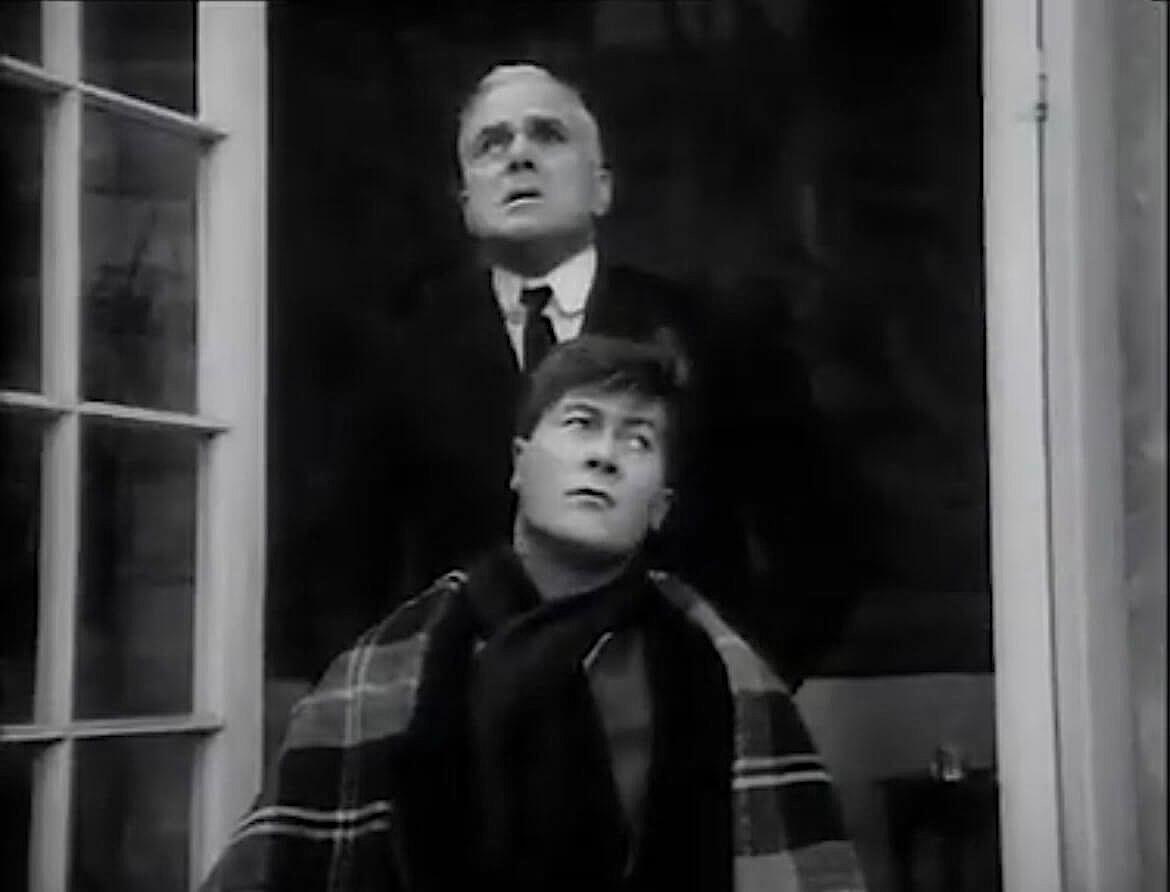
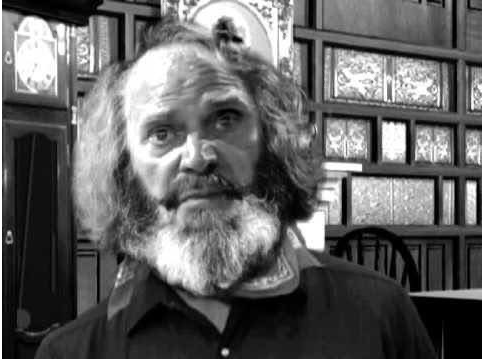
In 1969 Esmond made appearances in two major film productions. The first was as a blind ballad singer (right) in Where's Jack?, directed by James Clavell, a story of highwaymen in 18th century England, starring Tommy Steele as the main character, Jack Shepard, and a cast that included Stanley Baker, Sue Lloyd and Alan Badel. The film was made at Ardmore Studios in Ireland and Nora travelled there with Esmond to watch production unfold. It was a pleasurable experience for both, Esmond working and making money and Nora resting and enjoying a holiday in a country that she quickly fell in love with. They discovered a restaurant in Dublin called Othello's which became a favourite, especially after their first visit when a caring waiter endeared himself to Esmond by telling him that he had put his mustard "at twelve o' clock"!
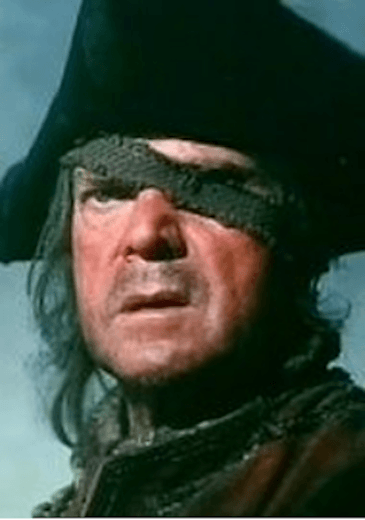
The second film was Anne of the Thousand Days with Richard Burton and Genevieve Bujold playing out Maxwell Anderson's 1948 telling of the love affair between Henry VIII and "bold spirited" Anne Boleyn. Despite receiving negative reviews, the film was nominated for ten Academy Awards (winning one for best costumes) and Genevieve Bujold's performance in particular was highly praised. Esmond and Nora appeared together as Kingston and Lady Kingston, the husband and wife whose sombre duty it was to keep Anne Boleyn at the Tower of London and ultimately to assist in administering her execution. Although Nora continued to work on stage and television, Anne of the Thousand Days was her penultimate screen appearance. Her final role was less weighty, namely with Frankie Howard in Up The Chastity Belt (1971), a screen version of the television comedy series Up Pompeii.
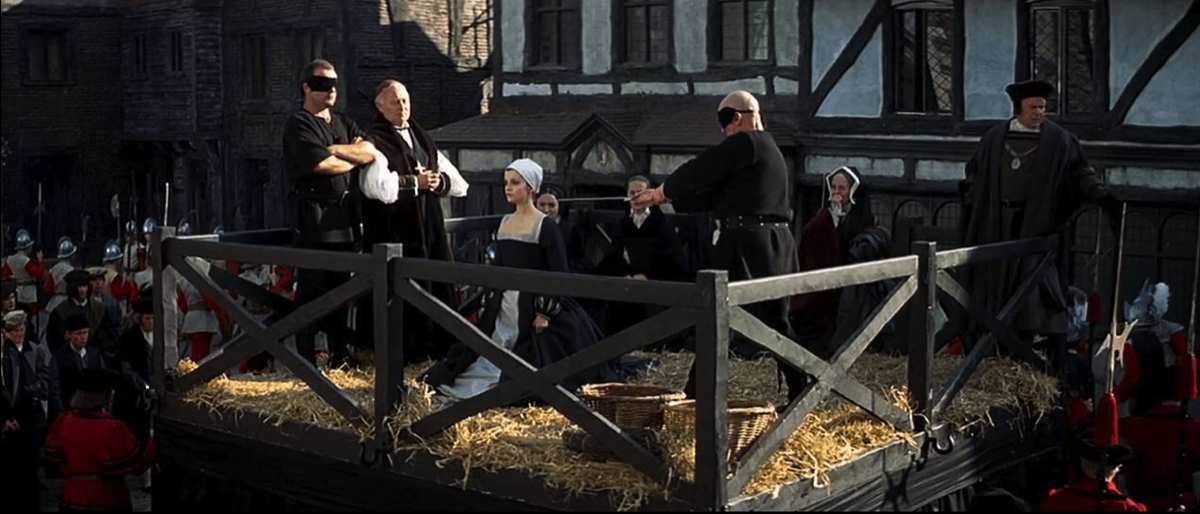
The execution scene from Anne of the Thousand Days (1969). Behind the swordsman are Nora and Esmond as the Kingstons (Anne's carers during her stay in the Tower of London), Nora with her hand to her mouth and Esmond looking away.
1969 was also a busy year for Esmond on stage. At the Greenwich Theatre he appeared in two productions - Spithead and Martin Luther King, the latter a play with music featuring Nina Baden-Semper and Derek Griffiths. Then at the Hampstead Theatre Club he appeared with Eric Thompson (father of Emma Thompson), in The Black Swan Winter. In a review in the magazine Play and Players (July 1969), critic Robert Cushman wrote: "Eric Thompson supplies the hero with all the wistful charm his author has wished on him, Margery Mason adds another to her individualised line of ineffectual mothers, and Esmond Knight's stumpy talent, too often expended on sub-Dickensian grotesques, is marvellously matched as the father.'

The Sunday lunch scene from The Black Swan Winter which opened
at the Hampstead Theatre Club on 5th May 1969. Left to right:
Eric Thompson, Veronica Hurst, Margery Mason, Esmond.
At about the same time as Anne of the Thousand Days was first showing in cinemas, Esmond took a trip to Eastbourne for a performance of a very different kind. He had been invited by the Royal National Lifeboat Institution to preside over the naming ceremony of a brand new lifeboat - the Vincent Nesfield - named after the surgeon who, miraculously from Esmond's perspective, had restored sight in his right eye in 1943. A third of the cost of the boat had been raised by an Eastbourne resident, Mrs Joyce Giddins, another grateful patient of Nesfield's whose life he had saved forty years earlier.

Mrs Giddins had assiduously raised the money over a period of time by organising (amongst other things) local coffee mornings, bridge drives and bring-and-buy sales. Other funds came from legacies left by various people in wills. Happily for all concerned, Vincent Nesfield, then in his 90th year, was able to be present at the ceremony which took place on Eastbourne beach at 3:15pm on 9th April 1969.
A press photograph of the naming ceremony for the RNLI lifeboat 'Vincent Nesfield', performed by Esmond on the beach at Eastbourne.
(Photograph courtesy of The Times)
The Vincent Nesfield was a 237ft 'Oakley' class self-righter. She was built in 1968 in Littlehampton at a cost of £38,000 and was first shown publicly at the International Boat Show at Earls Court in January 1969. This particular boat became a member of the RNLI's Reserve Fleet and, rather than stationed permanently in one location, she moved around the coast of Britain covering for stations which were temporarily without their own boat.
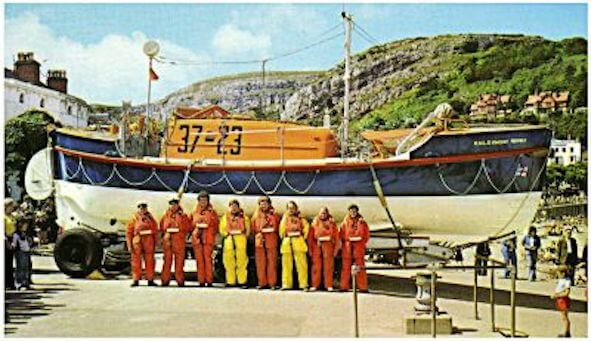
A postcard of RNLR Vincent Nesfield and her crew when she was stationed at Llandudno - date unknown.
One of her service calls took place on 19th December 1981 when she tried to rescue the crew of the Penlee lifeboat, Solomon Browne, which had got into difficulties helping a coaster, Union Star, off the Cornish coast. In atrocious conditions, the eight-man crew of Solomon Browne managed to rescue four men, despite their lifeboat being lifted twice onto the deck of the Union Star, before encountering problems themselves. Vincent Nesfield, stationed at Sennen Cove, was launched but unable to round Land's End to reach the other two boats. She was launched a second time and joined other rescue craft, but too late to save the crews of the Solomon Browne and Union Star who all perished. The average lifespan of a lifeboat is approximately twenty years and they cannot be resold once withdrawn from service; so the Vincent Nesfield was eventually broken up in Arklow in December 1991. she left behind her an impressive record. During her period of active service she answered ninety-eight calls and was responsible for saving thirty-nine lives.
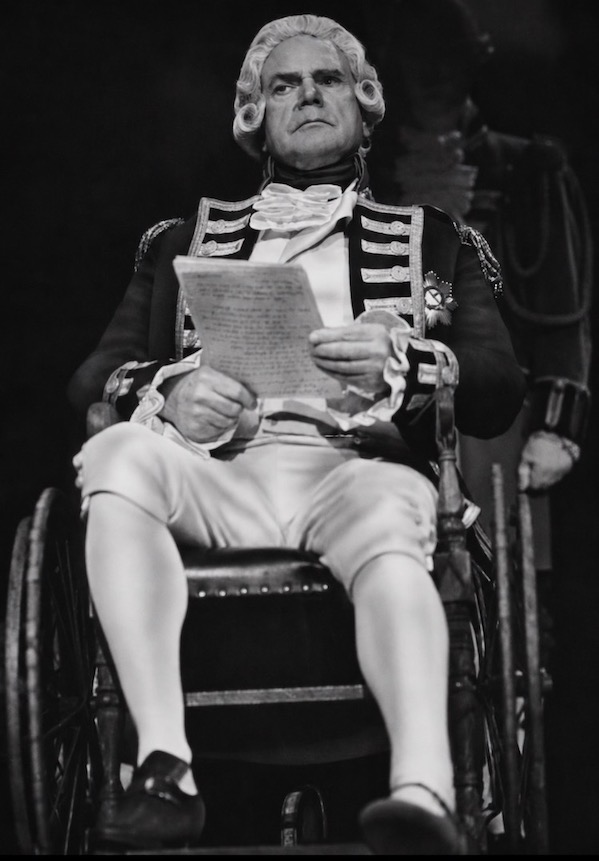
As Admiral Lord Howe in the play Spithead by John Hale which opened at the Greenwich Theatre,
London, on 19th November 1969. The play was based on events of the 1797 Royal Navy
mutiny at Spithead in which sailors protested about poor conditions and low pay.

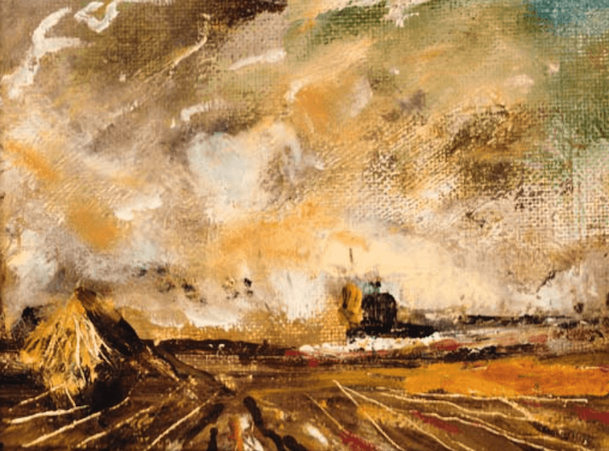
On 16 December 1969, playwright, actor, composer, director and singer, Sir Noël Coward, celebrated his 70th birthday. Esmond was a huge admirer of the man and his work and commemorated the occasion by sending him this specially painted picture. On the reverse he inscribed: "Dearest Master - with everlasting gratitude - and devotion, from Esmond - 'Very Flat Norfolk.'"
["Very Flat Norfolk" is a reference to an often-quoted line in Noël Coward's 1930 play Private Lives.]
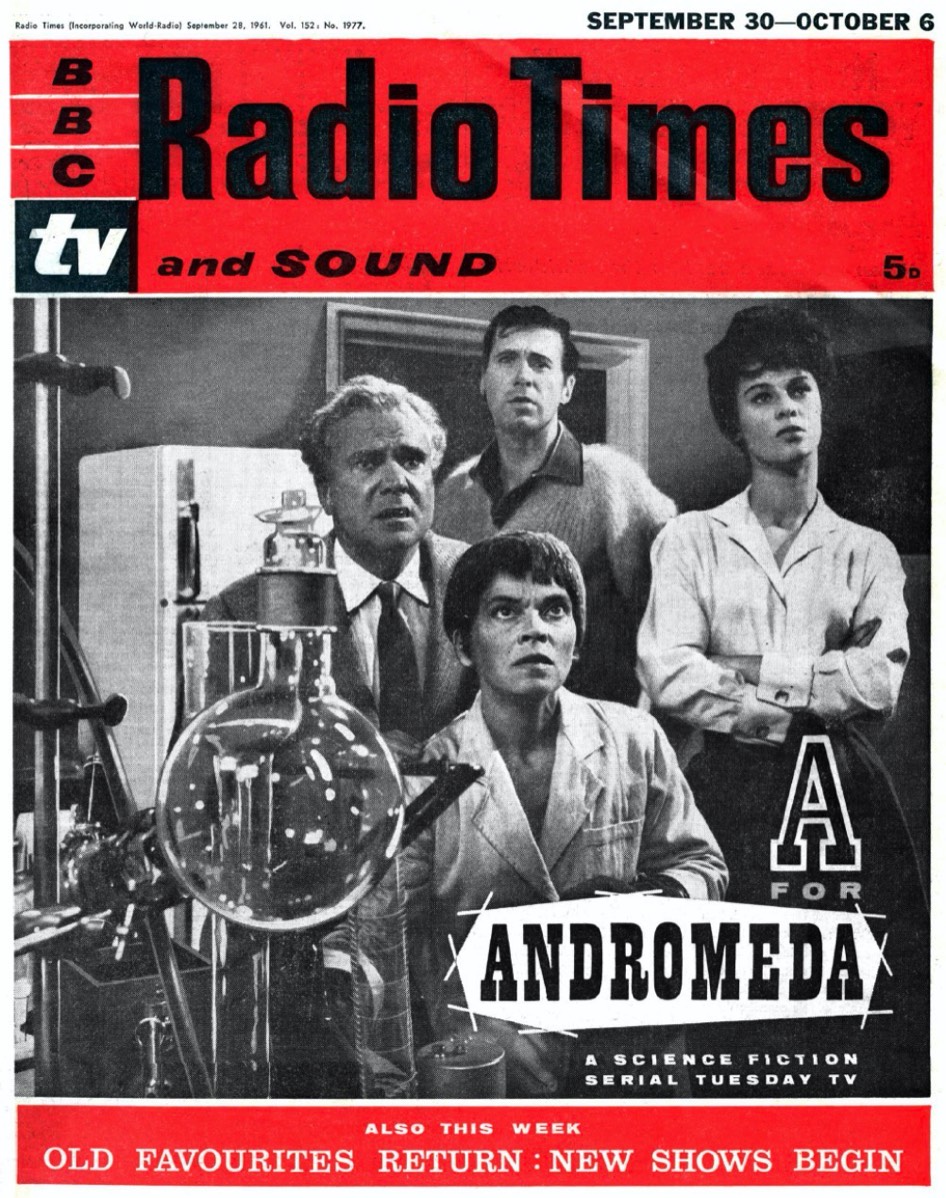
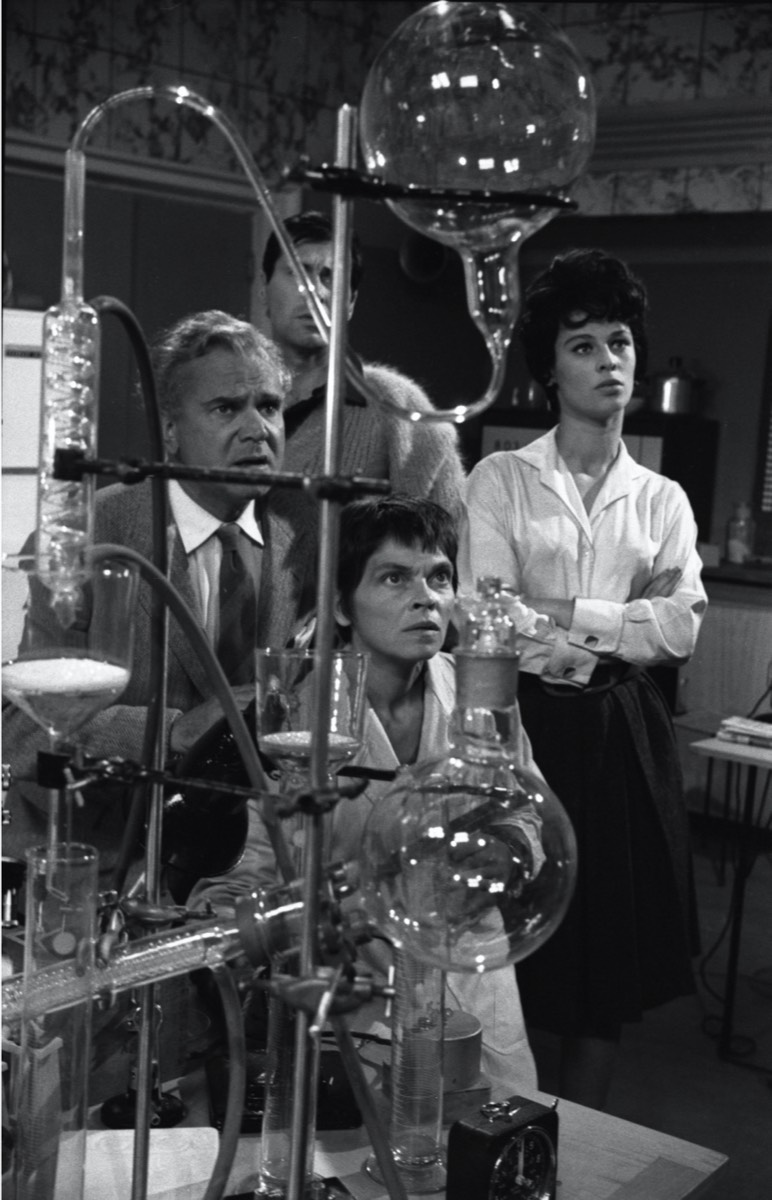
(Left): The front cover of the Radio Times, September 1961, advertising the BBC's forthcoming new science fiction serial
A For Andromeda. Clockwise from the left: Esmond, Peter Halliday, Julie Christie, Mary Morris.
(Right): a still of the almost identical shot taken at the same moment.
(Images courtesy of the BBC - not to be reproduced onwards without explicit permission)